

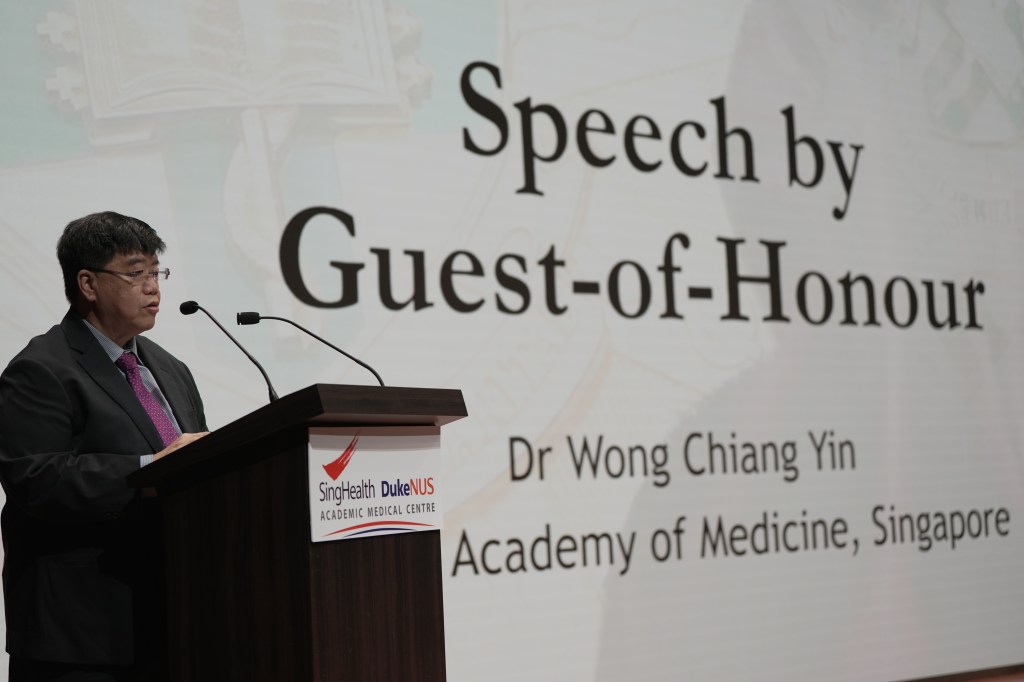
Photos courtesy of College of Family Physicians, Singapore
President of CFPS, Dr Wong Tien Hua, CFPS Council members, colleagues, inductees, guests
Thank you for inviting me to this year’s CFPS Commencement Ceremony.
First, I would like to say that for the record, I am an unusual Master of the Academy of Medicine, Singapore. This is because before I was a fellow of the Academy, I volunteered my services to CFPS quite a bit, in addition to being a Council member of SMA. I hung around many eminent GPs in my younger days. I seriously considered becoming a family physician before I stuck it out with Public Health and I also really enjoyed my polyclinic posting, which was largely spent in Ang Mo Kio Polyclinic. I also did a fair bit of locum.
I remember being part of the CFPS committee that went to Ireland in 1998 to bid to host the WONCA Conference six years later. We were holed up in a hotel for a few days in a place called Killarney in Cork County in Ireland. The bidding team was led by Chairman Tan See Leng. The rest of the young guns included Kwan Yew Seng, the late Tan Chee Beng, and me. We were accompanied and advised by senior family physicians who had won Singapore the rights to host the 10th WONCA World Conference in Singapore in 1983; including Prof Goh Lee Gan, Dr Alfred Loh, Dr Richard Ng, Dr Arthur Tan, just to name a few. We were unfortunately not successful in our bid and the 2004 Conference went to Orlando, USA.
After the meeting was over in Killarney, we then went to Dublin for the actual World Conference that year. I remember sharing the same hotel room with Prof Goh Lee Gan to save costs. Yes, in those days, we shared rooms. I doubt any doctor today will do that for a medical meeting unless it is with your close friend or classmate or spouse.
Undeterred by failure, and with a few reinforcements, the core team regrouped in 2001 in Durban to bid to host the World Conference in 2007. This time, CFPS was successful, and so, the 18th WONCA World Conference was held in Singapore. We had clinched the hosting rights by just one vote.
The Conference was highly successful both in the academic and financial sense. The surplus from the Conference contributed a fair bit to funding the purchase of CFPS’ property a few years later. I have jokingly told Tien Hua that my WONCA efforts contributed to funding a few bricks in the Neil Road Property.
I also spent quite a bit of time in the Graduate Family Medicine Centre on the 2nd floor of 76 Jalan Jurong Kechil, where past CFPS and SMA President Cheong Pak Yean’s clinic is located. I count many of the past CFPS Presidents and Council members of CFPS as my mentors and dear friends.
As I recall all these in my old age now, I realise I have been fortunate to be able to witness the development of Family Medicine in the last 25 years or so from a front row seat that afforded a great view.
And as an outsider with this perhaps insider vantage point, I would like to offer you three observations this afternoon for your consideration.
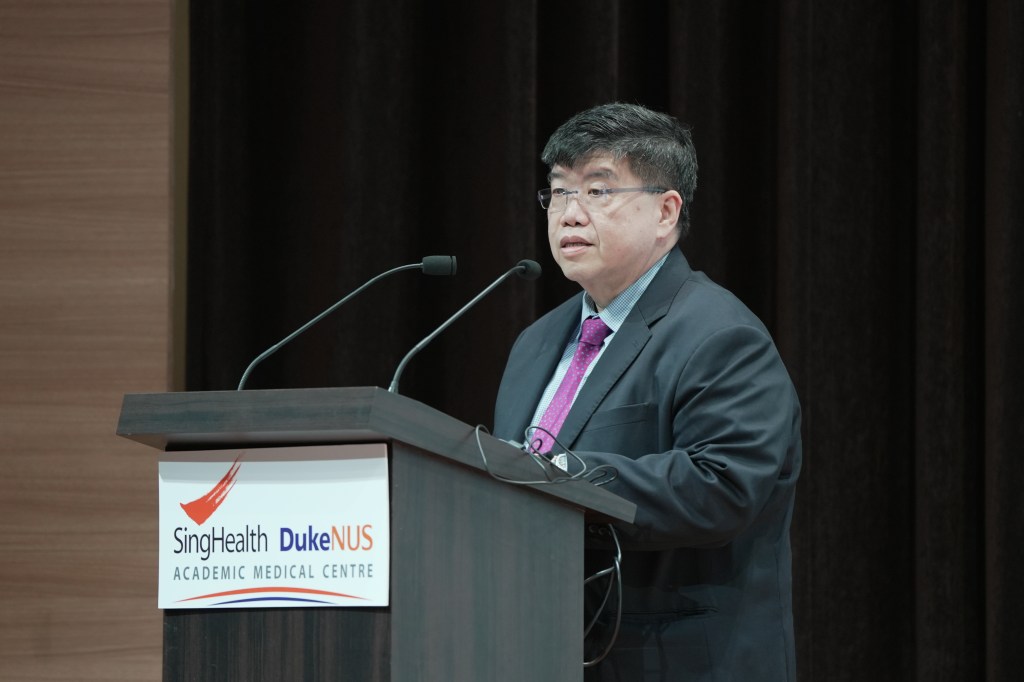
Photos courtesy of College of Family Physicians, Singapore
Firstly, the development of Family Medicine is different from many other disciplines. It is evident from my conversations as a young man with family medicine legends such as the late Dr Wong Heck Sing, Dr Lee Suan Yew and Dr Lim Lean Huat, the origins and development of FM is ground-up, community-driven. A few good men and women came together and formed CFPS in 1971, formerly known as the College of General Practitioners Singapore or CGPS and they drove the development of FM from the perspective of meeting the professional needs of fellow GPs and to improve the training of Family Medicine so that their patients can be better served – from the perspective of FPs working in clinics deeply embedded in the community.
This is different from say, many hospital-based disciplines, where development and evolution of specialty disciplines is driven from the top, often in tertiary hospitals and from university medical schools, where full-time academics call the shots and everyone has to follow.
Hence, while the pursuit of academia is important, we must never forget that FM and CFPS’s roots lie in the community. While academic aspirations are very important, CFPS’ purpose remains enabling and equipping FPs to better serve patients and the community in the most practical of ways, on a needs-based basis. This is the secret sauce that makes CFPS and Family Medicine stay relevant in healthcare and society.
The second observation I wish to make is that while we may not have homogenous unity, we need to remain focused and achieve unity in purpose.
CFPS membership now consists broadly of three groups:
- The private sector FPs working in usually small clinics,
- the polyclinics FPs and
- FPs working in the hospitals and continuing care institutions.
There is more diversity and career opportunities now, which is a good thing. But with diversity brings challenges. The diversity in the leadership and general membership of CFPS currently reflects this reality on the ground, which in turn translates into homeostatic equilibrium, which as we all know as doctors, is also a good thing.
I hope the three groups can remain united and stay focused on what is important to FM and CFPS, which is to ensure that the FPs we produce are relevant to the needs of the community. And perhaps it can also work with university academia to ensure that not just the training, but the assessment process stays relevant to the needs of the community too.
In summary, the entire milieu of training and assessment must not just produce FPs that some of us desire to have, but also what the community wants and truly needs. Both in quality and in quantity, and the two are intertwined. Indeed, the imperative of Healthier SG means CFPS and the academia need to have unity in purpose and remain focused on this target.
Which brings me to my third and last point, why do we not have more inductees today? I am told for this commencement, there are 164 doctors enrolled for GDFM, 26 for M.Med (Family Med) and 25 for FCFP.
Currently, the medical profession’s ranks increase by about 700 a year. 500 come from our three local medical schools and another 200 from overseas.
Each year, about 40% of this 700 or about 280 to 300 doctors are given training positions for specialties. This 40% cap is by design because we really do not want too many specialists.
That leaves another 400 doctors in each cohort unaccounted for. Today, we have 190 doctors commencing either their GDFM or M.Med training journey. Using today’s numbers as a guide, it would mean that about another 200 doctors are neither training to be specialists nor FPs. If this is the steady state of affairs, then it is deeply troubling.
We must ask ourselves, why are there not more doctors taking up Family Medicine as a career?
We also have to be honest with ourselves, going by past record, not all of the inductees present will finish what they set out to do today. There will be attrition, unfortunately.
- Where will these 200 doctors who are not training to be either FP or specialists end up?
- And where will those who do not finish their FP training end up?
- Will many of them become aesthetic doctors and is that where we want them to be?
It is clear that Singapore needs more FPs. And there is no lack of government support. Indeed, Minister Ong Ye Kung’s remark earlier this year that he hopes to see Family Medicine become a SAB-recognised specialty underscores his commitment to the cause of Family Medicine. So, we need to ask again, why aren’t more doctors in each cohort taking up FM as a career?
Are people deterred from taking up FM because of poor prospects? Are the sky-high rents of HDB shop-lots a deterrent? Are the training requirements too exhausting? Or the assessment and examination outcomes too discouraging?
These are tough questions that FM leaders need to face and answer.
But I digress. Today is a happy occasion. We are here to celebrate the beginning of a journey that many have found to be rewarding beyond measure, perhaps not in monetary terms, but certainly in intellectual, social and emotional fulfillment.
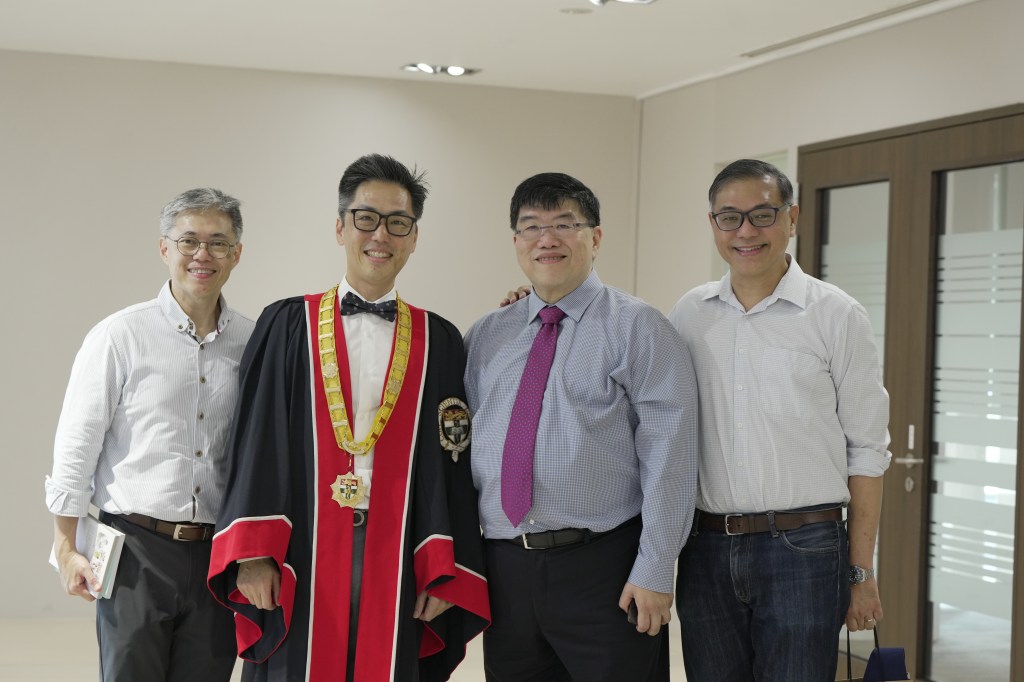
Photos courtesy of College of Family Physicians, Singapore
Trust me on this. In two weeks’ time, my NUS medical school class will be celebrating our 30th Anniversary since graduation. I have come to realise that most of the happiest, most fulfilled and at-peace classmates I have now are FPs. And perhaps that is reason enough to be a Family Physician.
It leaves me to offer my best wishes to the inductees who are commencing their GDFM, M.Med and FCFP training journeys.
Thank you for your forbearance in hearing an old man ramble and may you have a wonderful afternoon of convivial fellowship.
 Master's Message
Leave a comment